When She Goes Cold, Distant, and Says She Doesn't Love You Anymore
She didn't slowly fall out of love.
She switched.
One day she was there. The next she's cold, distant, unreachable — going through the motions of the relationship without any of the actual relationship in it.
No warmth. No affection. No real conversation.
And everything you try to fix it makes it worse.
You're not imagining it. And you're not dealing with a communication problem or a rough patch. You're dealing with something specific — with a specific set of dynamics that most people never understand until it's too late.
If this is happening to you
- She's cold and distant — even when you're in the same room
- Physical and emotional affection has stopped
- She says she doesn't love you, or isn't sure anymore
- Conversations about the relationship go nowhere or make things worse
- You've tried more attention, more space, more talking — none of it works
If that describes your situation, you are not dealing with a communication breakdown. You are dealing with emotional shutdown — and the standard responses to it make it worse.
What's actually going on
What is emotional shutdown in a relationship?
Emotional shutdown is what happens when a partner becomes progressively disconnected — withdrawing from affection, conversation, and closeness — as a protective response to feeling persistently unheard or emotionally unsafe. It is not the same as falling out of love, though it produces that feeling.
This is why it feels sudden. This is why she can't explain it. This is why nothing you've tried has worked.
You're not seeing someone who has made a decision. You're seeing someone who has been quietly disconnecting for a long time — and has finally stopped hiding it.
Emotional shutdown builds slowly. It starts with someone feeling unheard or not prioritised — not necessarily in dramatic ways, but repeatedly, over time. They raise it. They don't feel heard. They try again. Eventually they stop trying. The warmth withdraws. And by the time you notice, the process has been underway for months or years.
What comes out as "I don't love you anymore" — a phrase that almost never means what it sounds like — is not a decision. It's a description of a state they've been in for a long time, finally said out loud.
Q: Does she still love me if she's acting cold and distant?
Emotional shutdown produces numbness, not permanent absence of feeling. The coldness is self-protection, not a verdict. That does not make the situation less serious — but it means you are dealing with a process that can change, not a door that has permanently closed.
Q: Can someone lose feelings suddenly?
What looks sudden almost never is. The disconnection built over a long time. What changed is that she stopped hiding it. The phrase "I don't love you anymore" is when it became visible — not when it started.
Q: Is this permanent?
No — in most shutdown cases, it isn't permanent. But it feels permanent because the person has lost access to their feelings, not because the feelings are gone. That's why everything you try makes it worse — you're responding to what it looks like, not what it is.
This is where most people get it wrong
The standard advice when your partner goes cold: communicate more, show her you love her, give her space, go to therapy. Every single one of those can backfire — and usually does — because they all apply pressure to someone who has shut down as a protective response to feeling overwhelmed and emotionally unsafe.
Chasing confirms her instinct to pull back. Grand gestures feel like manipulation to someone who can't access the feelings you're trying to appeal to. Asking her to explain what she needs puts the emotional work back on her when she's already at capacity. Couples therapy at this stage often becomes a formal arena for grievances rather than reconnection.
The problem is not your effort. The problem is that you are applying pressure to a situation that pressure created in the first place. Understanding how that emotional distance built is what changes the approach.
If everything you're doing is making this worse, it's not because you're doing the wrong things. It's because you're applying normal relationship logic to a shutdown pattern. That's why none of it works.
Q: Why does everything I try make it worse?
Because emotional shutdown is self-protective. Anything that increases pressure — more affection, more conversation, more urgency — confirms to her that the relationship is emotionally unsafe. The harder you push, the more justified the withdrawal feels. You're not failing because you're not trying hard enough. You're failing because trying harder is the wrong move.
Q: What should I do right now?
Stop applying pressure. Understand the pattern before you act. Every move made without understanding what created this makes it worse — not because you're doing it wrong, but because you're responding to the wrong thing.
Q: Is this the same as her falling out of love?
In most cases, no. Emotional shutdown produces the feeling of lost love without it being the cause. The numbness is a protective state — not evidence that the feeling is gone permanently.
If this is what you're dealing with, the next step isn't trying harder — it's understanding the pattern properly.
If nothing you've tried has worked, this explains why
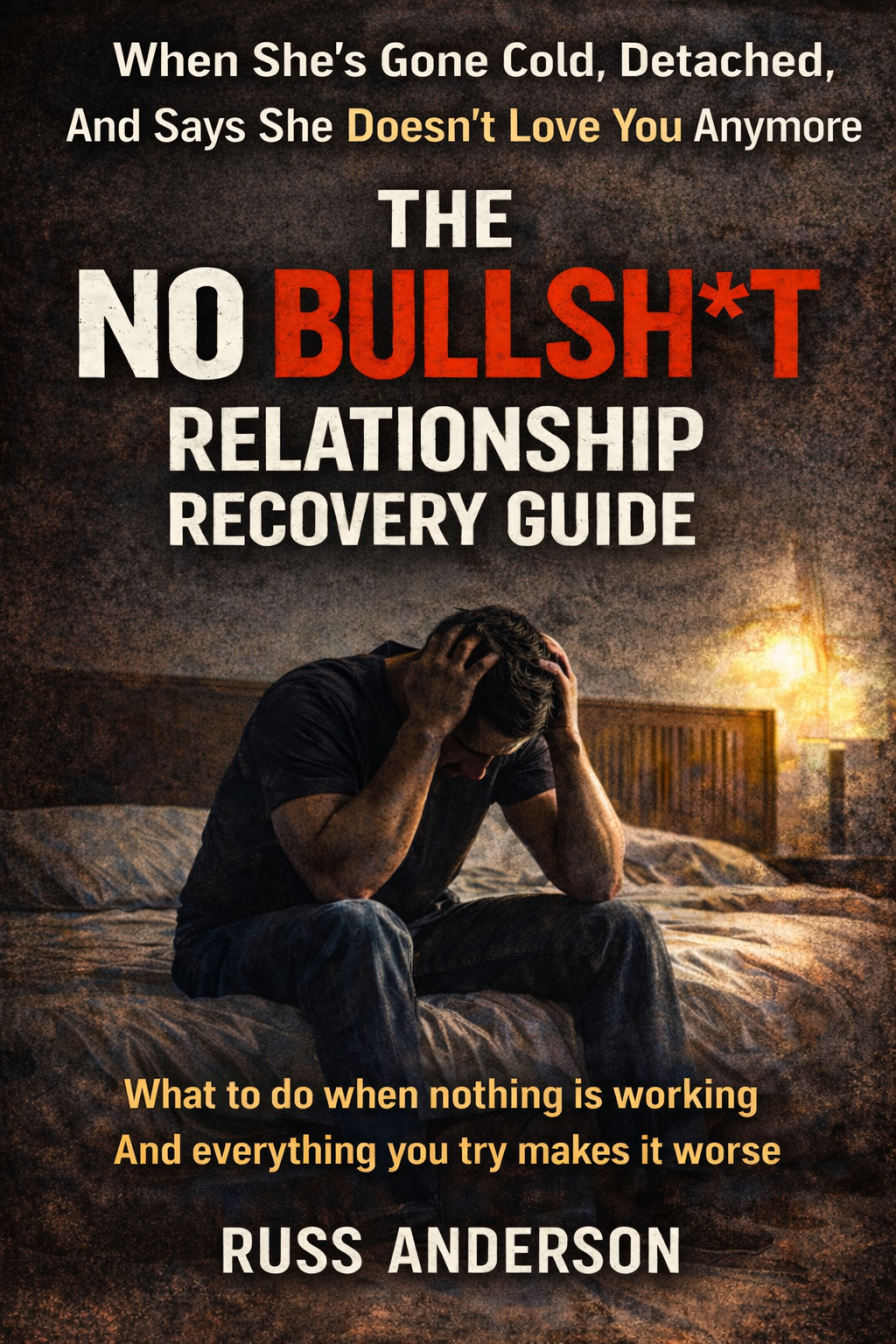
The No Bullsh*t Relationship Recovery Guide — When She's Gone Cold, Detached, and Says She Doesn't Love You Anymore
Written from inside this situation — not from theory, research summaries, or second-hand observation. The same pattern you're in was mapped in real time as it happened. No generic advice. No soft reassurance. No therapy language. A direct account of the shutdown pattern and a realistic path through it.
By Russ Anderson
Free AI Companion Tool
Use the Relationship Oracle GPT to get specific answers based on your situation — not generic advice applied to every relationship problem.
Relationship Oracle GPT →