Why Your Partner Has Become Emotionally Distant
She's there. She's in the room. But there's no warmth, no real connection, no genuine engagement. You're having conversations that don't connect. Going through the motions of a relationship without any of the actual relationship in it.
This isn't a rough patch.
This isn't stress.
This is a pattern — and once it starts, the things you'd naturally do to fix it make it worse.
What emotional distance actually looks like
Emotional distance in a long-term relationship is not always dramatic. It is often quiet, gradual, and easy to rationalise as something else.
- Conversations stay surface level — logistics, practicalities, nothing personal
- She is physically present but mentally elsewhere
- No physical affection — and she pulls back from any you initiate
- Noticeably less interest in your life, your thoughts, your day
- A growing sense that she is going through the motions
The critical thing to notice: this is usually not general withdrawal. She may be warm and engaged with friends, colleagues, her own interests. The distance is specific to the relationship — directed, not diffuse. That difference matters, because it tells you exactly what is happening.
Q: Why is my partner warm with everyone else but cold with me?
Because this isn't depression or introversion. It's directed withdrawal — a protective response to a specific relationship that has felt emotionally unsafe or consistently unsatisfying. The fact that she can engage warmly elsewhere tells you the capacity is there. It has been turned off within the relationship for a reason.
The diagnosis: what this actually is
What is emotional distance in a relationship?
Emotional distance in a long-term relationship is a pattern of progressive disconnection where one partner withdraws from closeness, affection, and genuine engagement — usually as a protective response to feeling persistently unheard or emotionally unsafe. It is not the same as introversion, stress, or falling out of love, though it can produce those feelings and be mistaken for them.
What people describe as a partner "going cold" is almost always a recognisable process: emotional shutdown. Once you understand it as a pattern rather than a personality change, the behaviour becomes consistent and predictable — which means it can be addressed.
The partner who shuts down has typically:
- Raised issues in ways that weren't recognised — or felt dismissed when they did
- Gradually stopped attempting to connect because attempts weren't working
- Reached a point of protective numbness where not engaging feels safer than trying
- Started describing themselves as numb, confused, or unsure what they feel
From the outside, this looks like coldness or cruelty. From the inside, it is a protective response to an environment that has felt emotionally unreliable for a long time.
How emotional distance builds
Long-term emotional distance does not appear suddenly. It accumulates through repeated moments — usually small, usually not dramatic — where someone felt unheard, dismissed, or not prioritised. Where they tried to raise something and it wasn't registered. Where they expressed a need and it wasn't met.
Over time, they stop trying to raise those things. Not with an announcement — they just stop. The attempts at connection decrease. The emotional sharing gets less. The warmth withdraws. And the other person often doesn't notice until the distance has become significant.
This is how someone can be in a relationship for years and feel genuinely blindsided when their partner says they feel disconnected — or that they don't love them anymore — a phrase that almost never means what it sounds like. From one side, it seemed sudden. From the other side, it had been building for a long time.
This is why you didn't see it coming. This is why it feels sudden when it wasn't.
Q: How long does emotional distance take to develop?
Usually months to years — but it becomes visible much later. The process runs quietly beneath the surface. By the time you notice the distance, it has typically been building for a long time. That is why it feels sudden even though it wasn't.
Q: Is this permanent?
No — in most shutdown cases, it isn't permanent. But it feels permanent because the person has lost access to their feelings, not because the feelings are gone. That's why everything you try makes it worse — you're responding to what it looks like, not what it is.
Why standard advice makes it worse
The standard responses to an emotionally distant partner — more affection, more conversation, grand gestures, couples therapy — all share one thing: they increase pressure.
When someone has withdrawn as a form of self-protection, pressure does not open them up. It confirms that the relationship is emotionally demanding and unsafe. The more you push, the more justified the withdrawal feels. More effort produces more distance.
This is why trying harder — or trying the same things with more intensity — does not work. And it is why a lot of standard relationship advice actively makes this situation worse.
If everything you're doing is making this worse, it's not because you're doing the wrong things. It's because you're applying normal relationship logic to a shutdown pattern. That's why none of it works.
Q: Why doesn't showing more affection help when a partner is emotionally distant?
Because emotional distance is a protective response, not a signal that she needs more affection. Increased affection registers as pressure — it confirms her instinct to pull back, not to open up. The solution is not more of what you're already doing. It's understanding what created the distance in the first place.
What this means for you
If your partner has become emotionally distant, the path forward is not about trying harder with the same approaches. It is about understanding the specific dynamics that built the distance — and responding to those, not to the surface symptoms.
That means understanding what the shutdown pattern is, what created it specifically in your relationship, and what kinds of changes address the underlying conditions rather than just the visible behaviour.
If this is what you're dealing with, the next step isn't trying harder — it's understanding the pattern properly.
If nothing you've tried has worked, this explains why
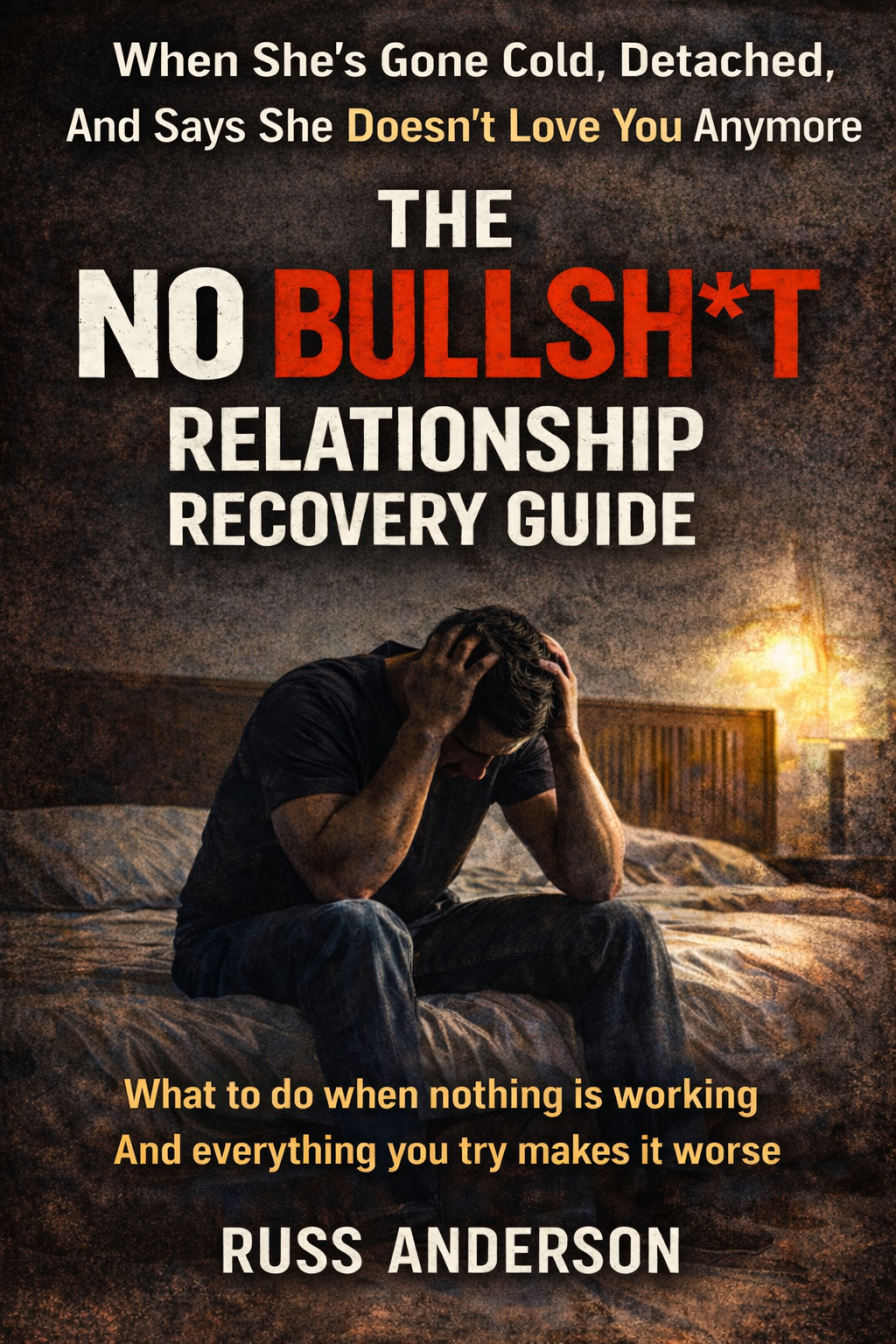
The No Bullsh*t Relationship Recovery Guide — When She's Gone Cold, Detached, and Says She Doesn't Love You Anymore
Written from inside this situation — not from theory or second-hand observation. The same pattern, documented in real time as it happened. No vague reassurance. No therapy language. Direct answers.
Free AI Companion Tool
Use the Relationship Oracle GPT to get answers specific to your situation — not advice written for the average relationship problem.
Relationship Oracle GPT →